Anyone who walks onto our flower farm sees that CC’s Blooms is a special place.
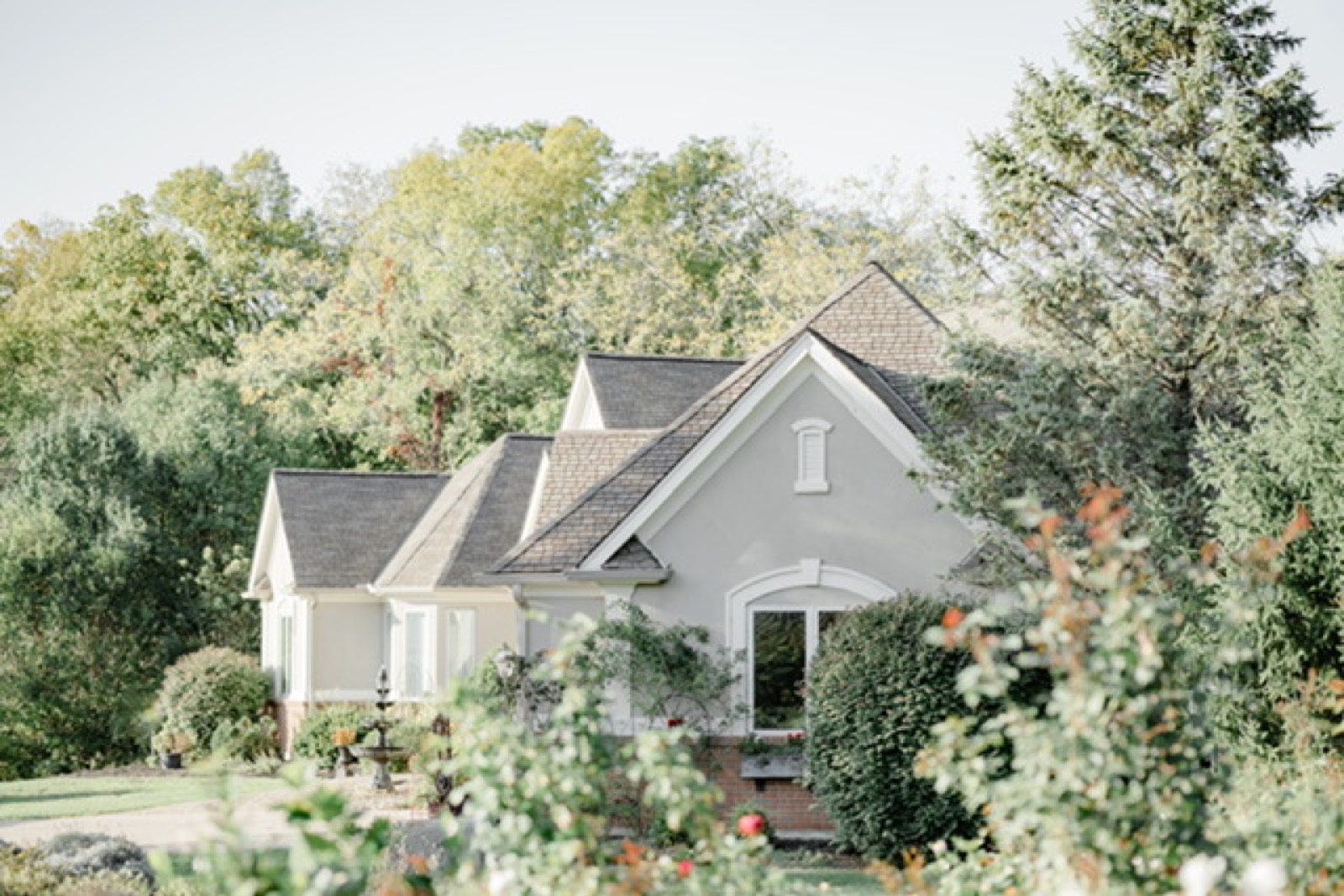
Our farm was originally part of Hidden Valley Orchard, before the property was bought and developed into a ten-acre homesite. Ten years ago, after three years living in England, we came back to the United States looking for land we could farm organically.
That was harder than it sounds. Most of what was available sat surrounded by large GMO farms, and we needed ground where we would not have to worry about pesticides drifting across our crops.
All the apple trees had been taken out before we bought it. There were no gardens and no flowers. Everything you see now was made in the years since.
We planted fruit and nut trees first, because they take the longest to bear — apple, pear, peach, plum, cherry, lemon, avocado, paw paw, quince and hazelnut. Strawberries, blueberries, raspberries, blackberries and elderberries went in alongside.
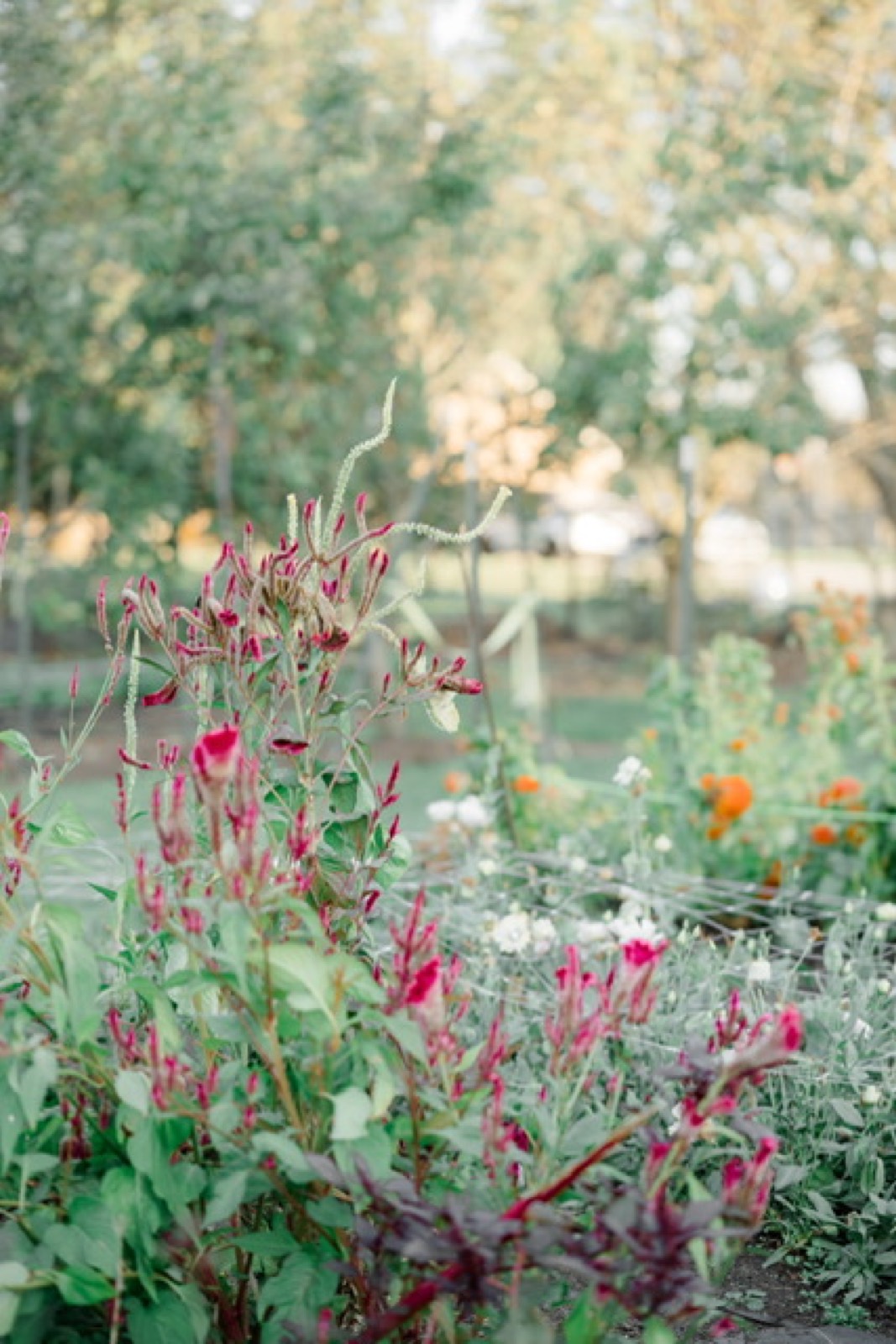
Then we concentrated on vegetables and herbs, and started growing flowers simply for our own pleasure. Carol’s background is in art and teaching, and the sculptures scattered through the beds are ones we made together — the flowers went in around them, to set each piece off.
People kept remarking on how beautiful the flowers were, and asking whether they could take some home. That is how a farm that grew fruit and vegetables became a farm that predominantly grows and sells flowers.
We grow annuals and perennials, leaning hard towards the things you cannot buy by the box.
Roses, dahlias, lisianthus, lavender, cosmos, ranunculus, gomphrena, strawflowers, iris, and a great deal more. We grow over a hundred varieties of dahlia alone.
We harvest several times a week so the freshest blooms go into the arrangements, which is why what we offer changes with the season rather than staying the same all year.
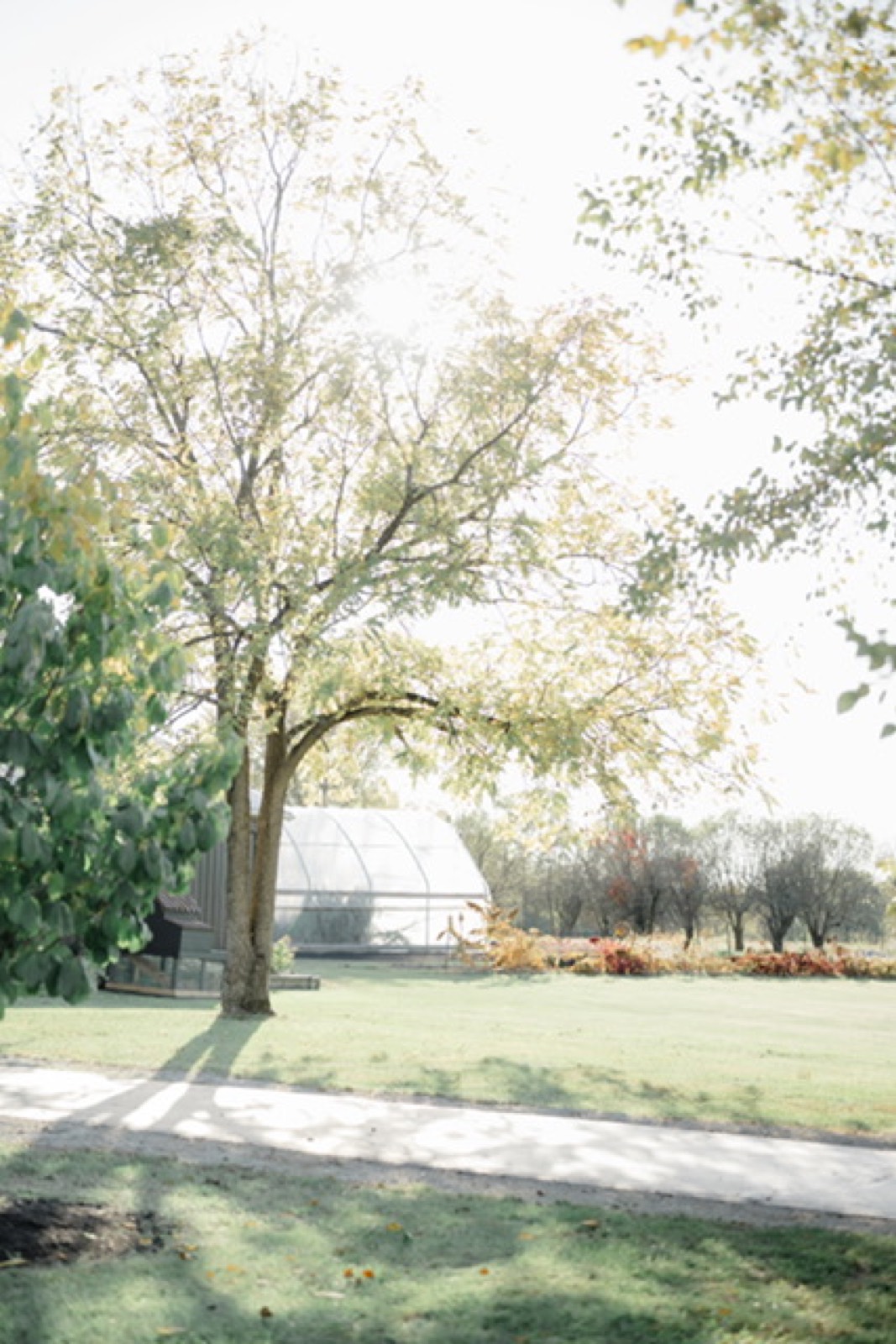
Realising we needed flowers all year round, we finished a 16′ × 20′ greenhouse behind the house at the end of 2019. It has passive and active solar features and an underground climate battery. Since then we have added a second greenhouse and a high tunnel.
In 2020 we put up The Bloomin’ Barn, 24′ × 50′, where cut flowers are finished into bouquets and arrangements. The inside is lined with 150-year-old oak barnwood, and the walk-in cooler that keeps everything fresh sits at the back.
The barn is also where our classes and workshops happen, and it is available for personal, business or spiritual retreats.
One of the more unusual things visitors notice is the swales. The property slopes north, and the swales catch water running across it so we can use it for irrigation rather than watching it leave.
We soil-test every year, then make our own biologically diverse inoculants and mineral-rich amendments from leaf mould, weeds, comfrey, eggshells, bone and blood meal, vinegar and fish emulsion. These go on through the season by side-dressing or foliar spray. Where insects or disease need treating, we use organic materials — neem oil, BT, pyrethrins, soap, molasses, sulphur and copper.
Between the solar, the generator and the composting, we are moving towards being substantially self-sufficient.
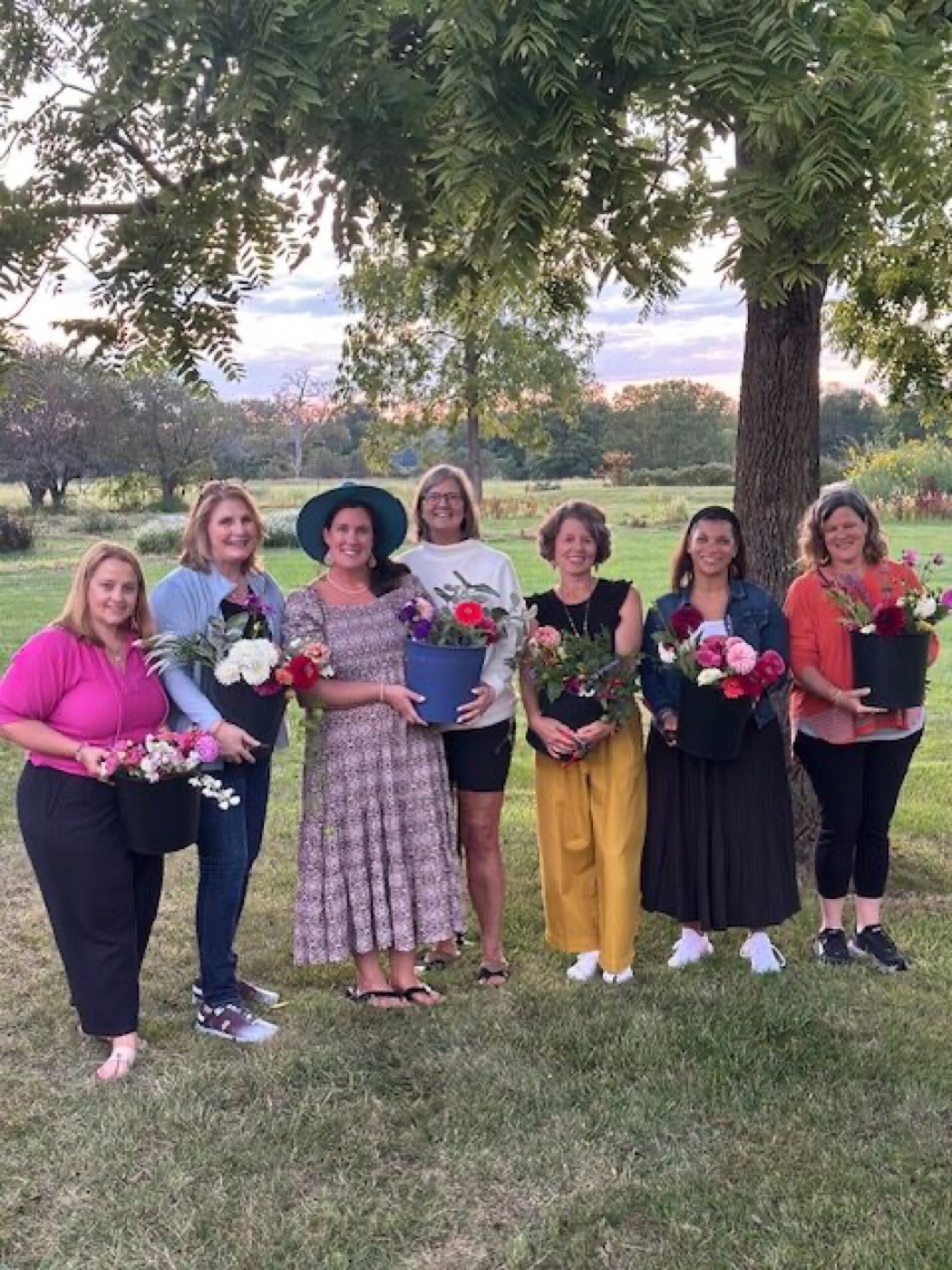
If you are passionate about flowers, we invite volunteers to help with farming tasks, make friends and spend time outdoors in the gardens. Call us to ask about the programme for the coming season.
We also host U Pick evenings on summer Saturdays, run classes in the barn through the year, and take our bouquets to the farmers markets in West Chester and Mason from May to October.